

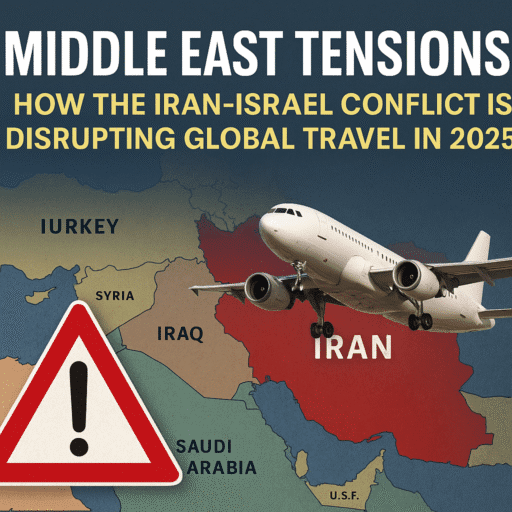


Discover how the recent Iran–Israel conflict is impacting global air travel, flight routes, and traveler safety across the Middle East and beyond
A Volatile Sky: The Current Situation
In a rapidly escalating series of events, tensions between Iran and Israel have reached a critical point, causing widespread disruption across the travel and aviation industry. For travelers flying to, from, or over the Middle East, the impact has been immediate and far-reaching.
From grounded flights and closed airspace to evacuation advisories, the situation is dynamic and evolving. Here’s what you need to know if you’re planning to travel through the region—or even if you’re flying long-haul routes that usually pass through Middle Eastern skies
Airspace Closures Causing Global Reroutes
Following missile strikes and growing military threats, several countries including Iran, Israel, Iraq, Jordan, and parts of the Gulf have closed or restricted their airspace. This has forced international airlines to divert flight paths, adding hours of detours and raising fuel costs.
Impacted Airlines:
- Emirates, Etihad, Qatar Airways
- Air India, Singapore Airlines
- Lufthansa, Air France, United, and more
Flights that typically fly over the Middle East are now being rerouted via safer corridors such as Turkey, Egypt, and the Mediterranean, resulting in longer journey times and potential delays.
Airport Operations Suspended
Key airports in the region, including Ben Gurion International Airport (Tel Aviv) and Imam Khomeini International Airport (Tehran), have been temporarily shut down or are operating at minimal capacity.
This has affected not only regional travel but also international transit passengers using Middle Eastern hubs like Dubai, Doha, and Abu Dhabi.
Evacuations and Travel Warnings
Governments worldwide have begun repatriation efforts and issued travel advisories for their citizens in Iran, Israel, and neighboring countries. Among those responding quickly are:
- India (Operation Sindhu – evacuating citizens)
- United States, UK, France, Germany
- Australia, Ireland, New Zealand, Taiwan
Most advisories urge citizens to avoid non-essential travel and remain alert for potential embassy notifications or flight changes.
Flight Cancellations, Delays & Fare Hikes
With dozens of flights canceled or rescheduled, the ripple effects are being felt across Europe, Asia, and the Americas.
Airfare has also increased as rerouting and fuel prices go up, driven by rising oil costs linked to regional uncertainty.
Travelers connecting between India and Europe, Asia and Africa, or Australia and the Gulf should prepare for:
- Unexpected cancellations
- Long layovers
- Higher prices
- Limited rebooking options
What Travelers Should Do Right Now
In times like this, preparation is key. Here’s how to stay safe and minimize inconvenience:
1. Stay Updated with Official Sources
Monitor your government’s travel advisory websites, such as:
2. Choose Flexible Tickets
Always book tickets with:
- Free cancellation or rebooking options
- Clear refund policies
- Trusted travel partners or agencies
Avoid High-Risk Routes
Select flights that avoid Iranian and Israeli airspace. Prefer alternatives through Istanbul, Singapore, or even North African hubs.
Opt for Travel Insurance
Ensure your policy includes war and conflict-related coverage, particularly for flight disruptions and medical emergencies.
Register with Your Embassy
If you are already in the region, register with your country’s embassy for emergency updates or evacuation support.
Broader Industry Impact
- Airlines are re-evaluating routes and operations across the region, with some pulling back completely for the coming weeks.
- Oil prices surged to their highest in 5 months, raising concerns of an impending rise in travel and logistics costs.
- Tourism demand in affected areas has plunged, affecting airlines, hotels, and regional economies.
The situation in the Middle East remains fluid. While many parts of the region continue to operate safely, travelers must stay informed, flexible, and cautious.
Whether you’re flying for business or leisure, now is the time to make smart travel decisions—use official sources, plan alternate routes, and secure insurance to ensure peace of mind.
Need help rescheduling your trip or looking for safe alternative routes? Contact Akbar Travels today for real-time updates and travel support.